
The Company is aware of the importance of a culture of Sustainability in conducting business to enable it to deliver effective Sustainability performance. To this end, the actions taken by the Company include provision of education and awareness raising for all Company employees and also stakeholders.
Economic Performance
In 2025, the Company took further steps in implementing strategic policies, such as for improved procurement of vital raw materials and greater efficiency in all areas of operation. Gross profit increased 7.75% from Rp 596.1 billion in 2024 to Rp 642.3 billion in 2025. Gross profit ratio went up from 8.59% in 2024 to 8.66% in 2025. Profit before tax in 2025 came to Rp 395.3 billion, a growth of 4.83% compared to the profit before tax in 2024 recorded at Rp 377.1 billion. In the bottom line, the Company booked a net profit of Rp 313.4 billion, up 6.36% from the 2024 net profit of Rp 294.7 billion.
Environmental Performance
The Company is keenly aware of the importance of environmental concerns. In conducting its business, the Company strives to pay careful attention to environmental friendliness and to safeguard the environment at all times.
The Company's commitment to management of the environment is implemented by conducting risk management analysis and mitigating these risks to ensure that all operational activities are carried out in line with regulatory standards and do not give rise to negative impact on the environment or local community.
In supporting the effective management of the workplace environment, the Company implements the 5R work culture (Concise, Neat, Tidy, Maintain, Diligence). The implementation of these principles is aimed not only at creating an orderly and efficient work environment, but also at maintaining cleanliness, tidiness, and the sustainability of the workplace environment.
The Company strives to prioritize the responsible conduct of business in environmentally-friendly practices and production processes that will minimize any negative impact from the Company's operations on the surrounding environment.
In its implementation, the Company adopts proactive and preventive measures to control the risk of environmental pollution and enhance the efficient use of natural resources. These efforts are carried out on an ongoing basis to preserve environmental quality and support the sustainability of the Company's business operations in the future.
The implementation of sustainable environmental management is also reflected in the Company's attainment of ISO 14001:2015 Environmental Management System certification. The Company has consistently maintained this certification since 2005, with its current validity extending through 2027. This reflects the Company's commitment to complying with international standards in environmental management.
In 2025, environmental expenditure incurred by the Company amounted to Rp 3,544,253,482.
Aspek Material
The Company is committed to increasing the use of environmentally friendly materials as part of the implementation of sustainability principles in its operational activities. This commitment is reflected in the selection and utilization of more environmentally responsible materials to minimize negative impacts on the environment.
As part of the implementation of this policy, the Company promotes resource efficiency by reducing paper consumption through the adoption of a digital, paperless work system. In addition, the Company utilizes compost or organic fertilizer for the maintenance of plants within its operational areas as a form of support for environmentally friendly practices.
Furthermore, the Company comprehensively implements the 3R principles (Reduce, Reuse, Recycle) throughout the entire cycle of material and resource utilization, optimizing reuse and applying recycling processes on an ongoing basis to enhance resource efficiency while supporting environmental preservation.
Energy Aspect
The primary energy source used by the Company is electricity supplied by Perusahaan Listrik Negara (PLN). In support of its sustainability commitment, the Company consistently implements various energy efficiency initiatives.
These efforts are realized through the promotion of energy-saving behavior in the workplace. The Company has replaced conventional lighting with LED lamps in both production and office areas as a measure to reduce electricity consumption. In addition, the Company actively provides education to employees on the importance of adopting an energy-saving culture, including encouraging the habit of turning off lights and electrical equipment when not in use.
The Company also applies automatic lighting control systems, including for street lighting within its operational areas, to ensure more efficient energy use and reduce unnecessary electricity consumption. Through these various initiatives, the Company seeks to improve energy efficiency while supporting sustainable resource management.
The Company's energy use intensity is as follows:

Water Aspect
The Company implements various water efficiency initiatives as part of its sustainable resource management efforts. These measures are carried out by increasing internal awareness through educating employees on the importance of water conservation and fostering a culture of responsible water use in the workplace.
The Company routinely conducts inspections and maintenance of supporting infrastructure, including pipelines, tanks, and water connections, to prevent potential leaks that may result in wastage. This measure forms part of the Company's operational controls to ensure that water is used optimally and efficiently.
Furthermore, the Company implements a cooling tower system that enables the circular use of water through a reuse process. The implementation of this system contributes to reducing water consumption.
The Company's water consumption is presented in the following table:

Biodiversity Aspect
The Company does not conduct operations in conservation zones or in areas with biodiversity. Nevertheless, the Company strives continually to maintain equilibrium in biodiversity, having developed a biodiversity conservation program.
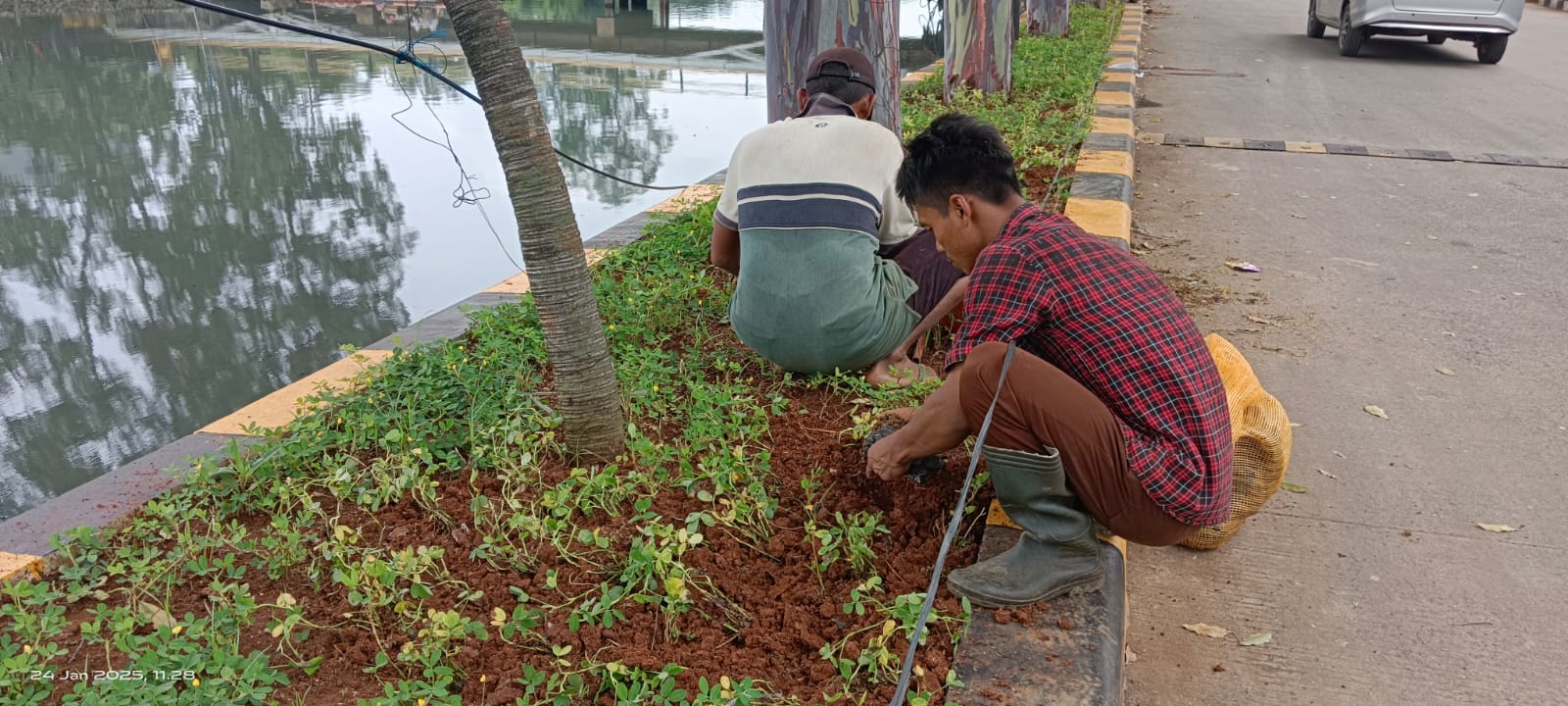
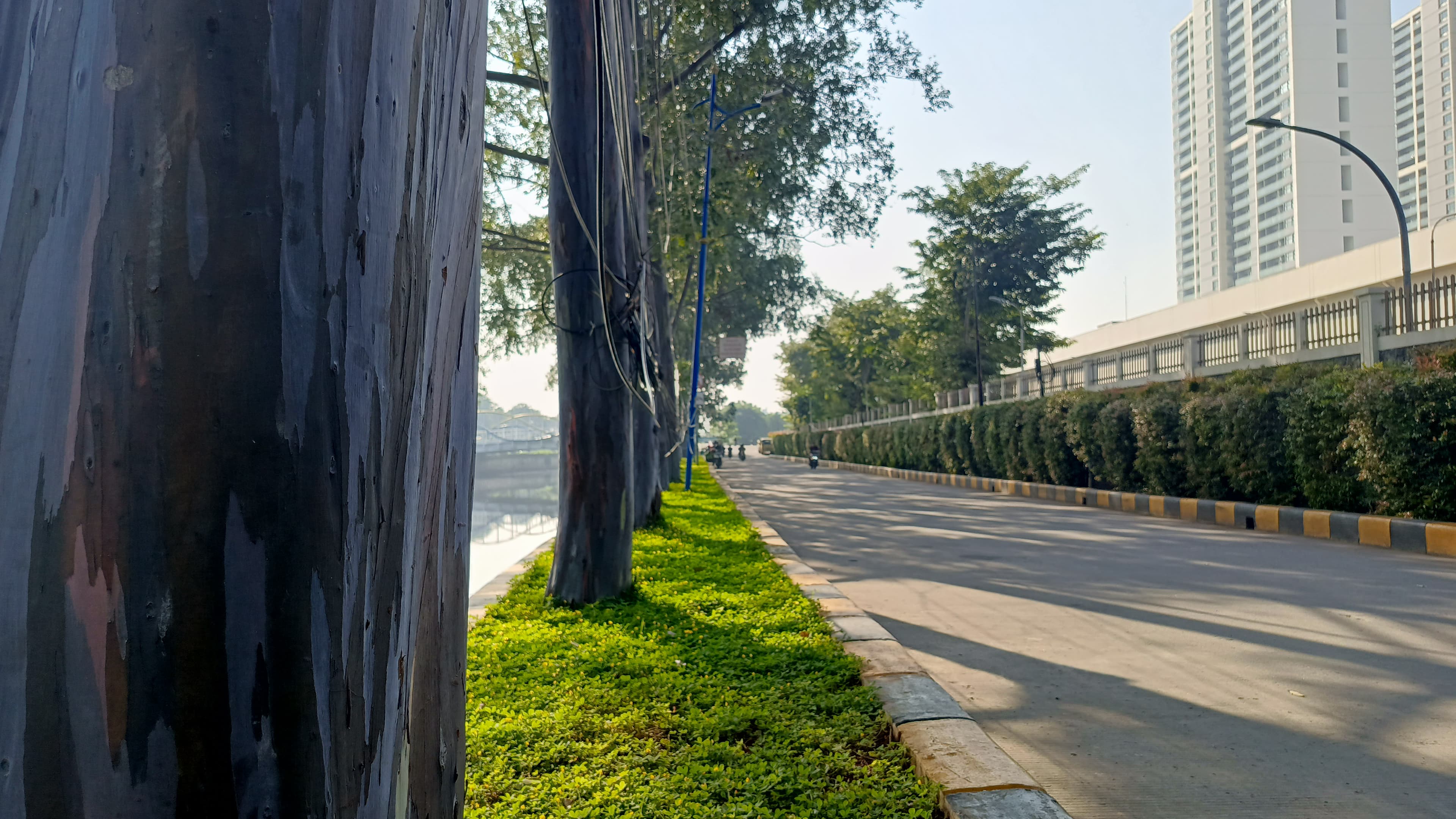
The Company's biodiversity conservation program has been carried out through reforestation initiatives, including the planting of tree seedlings within the Company's operational areas and the surrounding working environment. This program is intended to support environmental conservation efforts, reduce carbon emissions, improve air quality, and sustainably maintain ecosystem balance. In addition to planting activities, the Company also conducts regular maintenance and monitoring of plant growth to ensure the success of the program.
Throughout 2025, the Company carried out the cultivation of various types of plants, with a total of 3,074 seedlings.
Emissions Aspect
Air quality is an important part of a healthy environment. The Company has an obligation to maintain air quality parameters, most importantly on the Company premises.
The Company performs regular monitoring with the use of emission tests to ensure a maintenance of balance and quality in the Company's environment. In 2025, results from emission testing conducted by the Company confirmed that it complied with Environmental Quality Regulations.
As part of its efforts to achieve Net Zero Emissions, the Company has implemented a policy restricting the use of motor vehicles within the Company's premises. The Company also encourages employees residing in areas surrounding its operational sites to use public transportation as an alternative for their daily mobility. This initiative is intended to reduce carbon emissions, lower air pollution levels, and create a healthier and more conducive working environment.
The Company's emissions intensity is as follows:
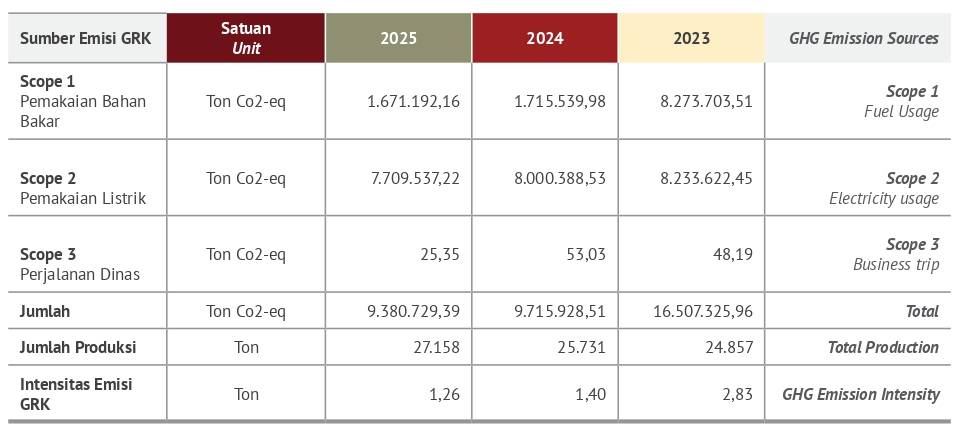
In support of its efforts to reduce Greenhouse Gas (GHG) emissions, the Company consistently carried out various emission control initiatives throughout 2025 to reduce emission sources while enhancing carbon absorption capacity.
The initiatives undertaken by the Company included the following:
- Conducting periodic emission testing within its operational areas to ensure that emission levels remain within the prescribed thresholds.
- Implementing a policy to restrict the use of motor vehicles within work areas as part of efforts to reduce emissions arising from internal transportation activities.
- Carrying out greening initiatives through tree planting to increase carbon absorption capacity and support the sustainable improvement of environmental quality.
Waste and Effluent Aspect
The Company ensures that waste generated from its operational activities is managed responsibly to prevent adverse impacts on the environment. This management is carried out through the implementation of a structured system for both hazardous and toxic waste (B3) and non-hazardous waste, in compliance with applicable regulations.
Furthermore, the Company places strong emphasis on waste reduction efforts from the production stage through supporting activities. This approach is directed at minimizing the generation of hazardous and toxic waste (B3) through enhanced process efficiency, controlled use of materials, and the adoption of more environmentally responsible operational practices. In this way, waste management is undertaken not only as a reactive measure, but also as a preventive effort in support of environmental sustainability.